How do you actually get traffic to a brand new digital product store when no one knows it exists yet?
That’s the question I’m working on right now.
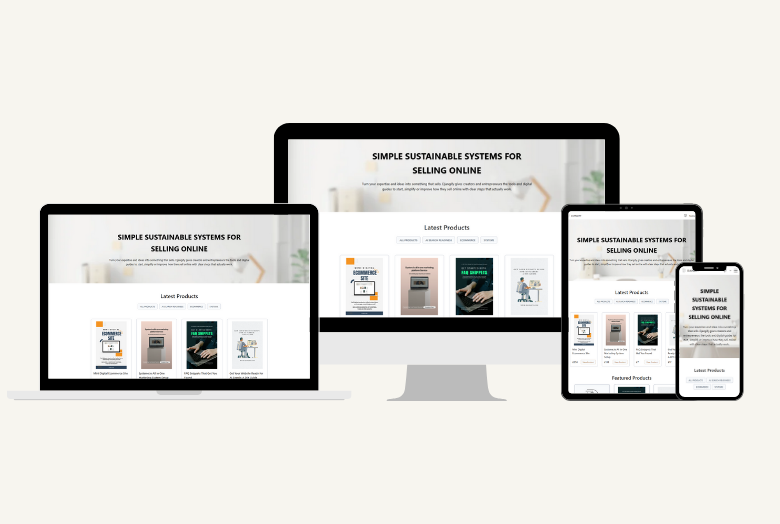
I’ve started building my own digital download stores. They are sites selling things like workbooks, planners, and guides. The first one only went live a few weeks ago, so this isn’t a case study about big numbers or instant success.
This is the system I’m putting in place to generate traffic consistently over time, and I’m documenting it as I build.
The Approach: Multiple Traffic Sources, One Goal
I’m not relying on a single platform.
Instead, I’m building a stack of traffic channels that all point back to my stores. Each one serves a slightly different role, but they all support the same outcome: getting consistent, targeted traffic to each digital download product and turning that traffic into an owned audience.
1. Search-Led Written Content
The foundation is written content based on what people are already searching for because each store has its own blog. This isn’t about writing for the algorithms because that doesn't work anymore. To bring in search results I have to focus on:
- answering real questions
- targeting specific problems
- creating content that can be found over time
Each post is tied to:
- a keyword or search intent
- a product or category
- a clear outcome
This is slower to build, but it compounds. Once it starts working, it continues to bring in traffic without needing constant updates.
2. Faceless Content (Short-Form Video)
Alongside written content, I’m going to be creating short-form video content that doesn’t rely on being on camera.
This includes:
- simple visual clips
- text-based messaging
- short, clear ideas
The goal is to build consistency on social media using them. This type of content allows me to:
- test ideas quickly
- see what resonates
- build visibility without friction
- find out what my audience wants
3. AI Avatar Twin (Brand Support)
I’m also experimenting with an AI avatar that represents my brand. This will help me with:
- creating consistent content
- reducing the barrier to posting (I don't have to spend hours picking out an outfit and putting on makeup)
- maintaining a recognisable presence
- saving time with editing
The avatar supports the same messaging and structure I use elsewhere - it’s just another format for delivery.
4. Documentation & Info Pages
Each store includes structured content beyond just blog posts. This includes:
- documentation-style pages
- Cluster pages
- information hubs
- clear explanations of concepts
These pages help with:
- internal linking
- search visibility
- giving depth to the site
They also make the store feel more complete and useful, not just transactional. I wanted each store to feel more like a complete online business - not just a place products are uploaded and sold.
5. Pinterest (Search + Discovery)
Pinterest acts as a hybrid between search and social. Content here is designed to:
- match search intent
- be visually clear
- link directly back to products or articles
Unlike fast-moving platforms, Pinterest content can continue circulating over time, making it useful for long-term traffic. I am part of a Pinterest group on Skool that provides member support and learning.
6. YouTube (Short and Longer-Form Discovery)
YouTube gives me a way to share my existing short-form content via Shorts and also to expand on ideas in more detail. This includes:
- walkthroughs
- explanations
- simple demonstrations
Longer-form content isn't needed for individual stores unless you are selling something like a template or something more technical. It will help to:
- create useful content
- support search
- build a library over time
7. Email List & Owned Audience
Traffic is useful, but it’s temporary. What I’m building alongside traffic is an email list, because that’s another asset I fully control.
Each store includes:
- a simple lead magnet (aligned to the product)
- a clear opt-in on key pages
- an email sequence follow up
The goal is to:
- capture visitors who aren’t ready to buy yet
- build familiarity over time
- bring people back to the store
Instead of relying on platforms to show my content again, I can:
- send updates
- share new products
- promote offers directly
Over time, this becomes more valuable than any individual traffic source.
Measuring What Works (GA4 + Testing)
Everything feeds into one question: Where is traffic actually coming from?
I use GA4 to track:
- traffic sources
- user behaviour
- which pages are performing
Each month, I review:
- which channels are generating traffic
- which content is being engaged with
- where users are dropping off
Small Paid Tests (Based on What’s Already Working)
I won't start with ads straight away. It is better to wait until there is a clear idea of where traffic is coming from. The plan is:
- Identify content that’s already getting attention
- Use that content as a base
- run small, controlled ad tests
This means I’m not guessing but amplifying what’s already working.
Monthly Iteration (This Is the Real Work)
This isn’t a one-time setup. Each month I will:
- review traffic sources
- identify what’s improving
- remove what isn’t working
- double down on what is
The goal is simple: increase traffic consistently, month by month to generate sales
Final Thought
There isn’t a single tactic that drives traffic on its own.
What I’m building is a repeatable system:
content → visibility → traffic → sales
Each part supports the others and over time, that’s what turns a simple digital product store into something that actually generates income.
Thanks for sharing: